


Mediocrity permeates the place like an undiscovered gas leak, compliance rules, there’s an obvious unquestioning attitude, and people aren't feeling safe or comfortable to ask questions.
“I think (American author and leadership expert) Patrick Lencioni sums it up well, when he talks about the absence, the paucity, of any formative conflict,” Brendan Maher says.
Lencioni talks about how we can be in a world of artificial harmony, he explains, where everyone’s busy, everyone’s happy, everything’s good – but then we never move to that point of what he calls the ideal conflict point.
“And I think we’ve got to push to that edge to have the robust conversations,” Maher shares.
“When schools are not going there, and there is that artificial harmony, I think it lulls us into a pathway to being mediocre, and I think that’s probably the why when we work with leadership teams, a strong focus is on high performance, and if high performance is going to be achieved, it has to be achieved on the back of a preparedness to go to the space, to the edge, and ask the questions that need to be asked, to support by all means, but also to challenge.”
Maher, who taught and led in eight schools across Victoria during a 40-year education career, is now a Leading Teams facilitator, and says great school culture starts with three essential actions from leaders: they need to be clear on common purpose, they must focus less on mechanics and more on culture and behaviour, and most importantly, they have to prioritise relationships.
“I think of my own principalships and I remember very distinctly being mentored by some of the wonderful Brigidene Sisters who were the leaders that formed me,” he explains.
“And their sense was when you go into a place, make sure you start with relationships – learn to spend time with people, to be with them, to get to know them and then deal with what needs to be dealt with.
“I would go so far as to say that coming to a deep purpose probably can’t happen until we’ve done some hard, deep-dive work into relationships.”
He says the core notion of purpose is one that can often be glossed over.
In his work, when asking people what is the core purpose of the business or their work in schools, oftentimes people will tell Maher what they do – rather than why they do it.
“I worked with an advertising agency, terrific group of people, and it was before Christmas a couple of years ago and when I asked on this introductory day what was the core purpose of your work, the MD made the comment, ‘oh look, we’ve got to grow the business’.
“I asked them to break into small groups, and consider who are the clients that they’re most proud of, and the work that they’re doing that inspires the most joy and pride in them.
“They came back after 15 minutes and talked about their work supporting not-for-profits, where they were helping in one instance, women who were fleeing domestic violence, and in a second instance, young, single mums, and they were doing safe, affordable housing work to support the not-for-profits to help them.
“One woman, quite emotionally, just said, ‘well, actually, when you think about it, our purpose is to give voice to those who otherwise don’t have one’.”
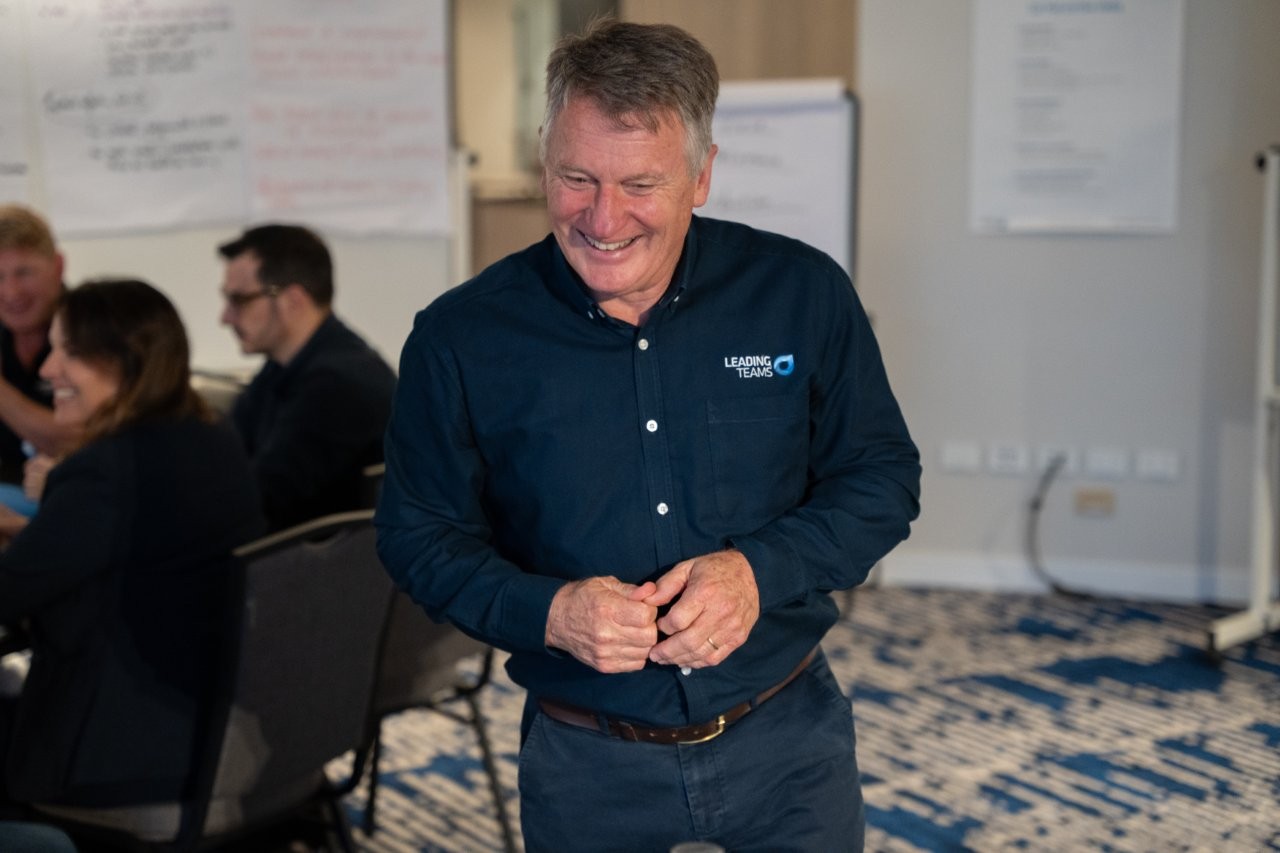
Brendan Maher says there is something that's palpable that you feel when you walk into a school where the culture is on song, where things are going well. “And equally there's also a sense, sometimes almost visceral, that you feel when things are not right,” he says.
Maher says while oftentimes schools he works with will say their purpose is for kids to achieve good results, he believes that we can get people to deeply explore that our purpose is to help humans thrive, to make our world a better place.
“It sounds grand, but I’m certainly sincerely of the mind that that deeper conversation can motivate and drive people to be better, to do better,” he shares.
“Now, when you do that, it’s going to pull you by necessity away from some of the mechanical rigidity that drives us. And to focus on. If we’re going to have those conversations about deep purpose, we need to have strong relationships to endure the rigour that would go with that.”
A key, Maher says, is having a genuine conversation around that and being able to have genuine conversations against agreed behaviours that affirm people’s practice, but also challenge that which is needing to be challenged.
“I reckon when we get the purpose right, the weighting on the mechanics, the busyness, the hurly-burly of what goes on in schools can be shifted onto what we call, the dynamic, the cultural behavioural focus.”
Maher’s teaching career began in 1980, at St Mary’s Primary School in Ararat, and he was later the founding principal of Emmaus Catholic Primary School in Mt Clear, Ballarat.
Starting with 21 students in 2008, when he left the school in 2017, it had grown to an enrolment of 380 students.
Just prior, in 2015, however, at just 55, Maher had a heart attack.
While in ICU, recovering from surgery, he listened to John Faine on ABC radio, talking about a medical journal report that had just come out, noting the irrefutable link between excessive workload, stress, and cardiovascular disease.
“I realised when I came back to work that I had to do things differently,” Maher says.
“I had a magnificent team, and I asked my friend and founder of Leading Teams, Ray McLean, at that time, to come in and do some work with us, just to really sharpen culture and perhaps allow for a greater sense of empowerment.
“Ray came in and started work with us, and it was one of the most pivotal things in a professional development sense that I’d engaged in, and the staff felt the same way.
“In 2018, we moved down to South Gippsland and a lovely staff team, but the leadership in that area of Victoria … was focused on conformity and compliance and rigidity and I just couldn’t reconcile myself to it.”
So, with the encouragement of his wife, Maher saw out the 2019 school year and then made the leap into the national culture and leadership organisation – just before COVID hit.
“If it weren’t for the strength and the care of my family and the team at Leading Teams, who have been absolutely exceptional, I don’t think I could have stuck it, but I now have six years hence, almost, and we’re doing well and I love the work, so, yeah it’s fantastic,” he shares.
“I think the thing that I love and inspires me is people having a crack, they’re really giving it their best shot, dealing with significant complexity, and so if our work on culture and behaviour can help navigate the complexity, which it does, then it’s an incredibly rewarding process and opportunity.”