“I was in high school and questioning what I want to do. When you’re a teenager, you’re a bit like, ‘well, if I lock myself into this career pathway, am I making the right choice?’” Wilson shares with EducationHQ.
Also passionate about art and being an artist herself, she was anxious to make good choices heading into Year 11.
“There’s a lot of pressure on deciding all at the age of 15, and so I approached my careers counsellor at school and I just said, ‘look, I’ve seen a VET course advertised that I’m interested in, what does that actually mean?
“She said, ‘well, what are you interested in?’ And I said, ‘I think I want to be a teacher’.”
At that point Wilson had been a tennis coach for about five years and felt she had a good understanding of working with kids and really enjoyed it.
The coordinator also happened to be Wilson’s maths teacher, who knew her quite well, and said to Wilson, ‘look, let’s put you into a traineeship, not a VET course or an apprenticeship – you get paid for your time and you’ll get hands on experience, and then you can decide if you actually want to be a teacher or if it’s just not for you’.
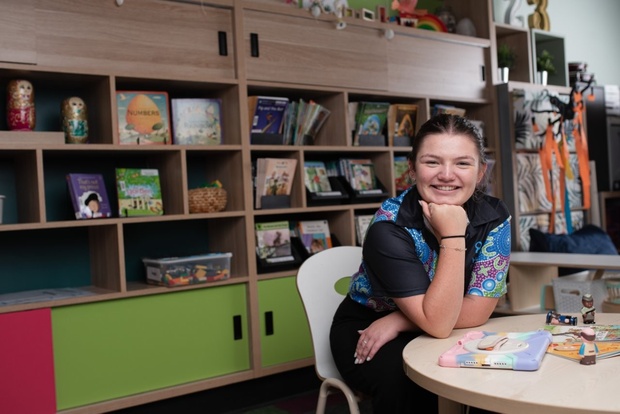
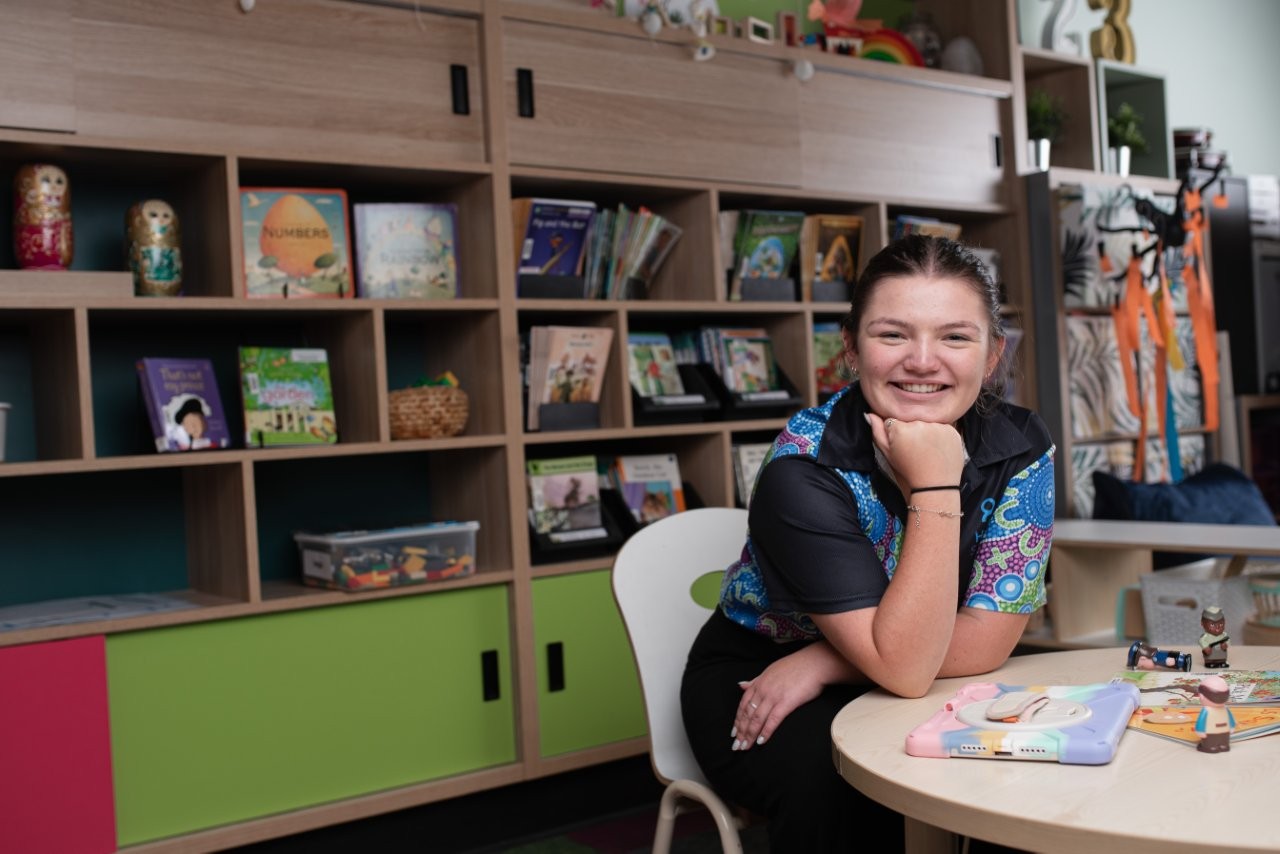
It proved excellent advice. The school-based traineeship with MEGT gained the teenager real industry experience (at Hospital School SA), while she completed a Certificate III in School-Based Education Support at MADEC Australia.
It also saw the teenager named 2024 Australian School-based Apprentice of the Year.
“Going to her gave me the ability to speak freely about being concerned about locking into a wrong choice, because I was like, ‘do I actually want to go to university?’
“Because that’s what the school system pushes at the moment. It’s given me that freedom to figure out a career path for me.”
Wilson’s commitment consisted of a practical placement one day a week at Hospital School SA, for seven-and-a-half hours, and online training, including Zoom calls as well.
Combined, it probably made up close to 15 hours a week, she says.

Wilson says her School-based Apprentice of the Year win was ‘such a fun experience’. “It solidified that I am doing what I need to do, I am helping people and I do have value – which I think has been really important for me to find.”
The South Australian says it was fortuitous that she was able to work at the hospital school.
Now studying at university to be a primary teacher, and having just finished her first teaching placement, she says it’s been invaluable seeing the difference between the mainstream and quite unique teaching environments.
“In hospital school, we’ve got seniors and primary students in the same space – and we’ve only got maybe a maximum of 15 kids to a classroom, but they are all different ages.
“So they could be from Kindy to Year 6 and we’ve got beds and wheelchairs and the kids have different medical needs.
“So we’re always thinking about the safety side of everything, as well as the individual learning for each student, because they’re all at different levels.
Whereas in a mainstream setting, lessons are more structured, with maths, English, science etc, at hospital school, it’s more, ‘OK, we’ve identified this learning area for you’, Wilson says.
“We might have you as a student for a day, we might have you for two months - we don’t actually know. So it’s just going with the flow in that kind of environment.”
Wilson says the school-based traineeship helped her significantly with finding her voice and trusting her own judgment.
“As I said, I had a bit of experience working with children anyway, but walking into a school-based setting, I was worried that I’d say the wrong things or that I didn’t know the right procedures.
“Or if I ask for help, am I going to look like I’m silly and don’t know what I’m doing? But I had the most supportive team at Hospital School. They really are just incredible people.”
The young educator says staff reflection time each day was a powerful motivator and an invaluable learning opportunity at such an early point in her career
“At the end of the day, we’d all come together as a staff and discuss the positives, the challenges, and talk through how in the future we could best support or manage those challenges a bit better as a team.”
Now well into her uni course, Wilson says being in a school setting as an educator feels “literally second nature” to her.
“I walk into the classroom and I can talk to my tutors about whatever they’re telling us.
“They’ve often use technical terms and I’ll just say to them, ‘ I completely understand, but can you put this into a real life scenario for me?’ and we can have that kind of conversation.
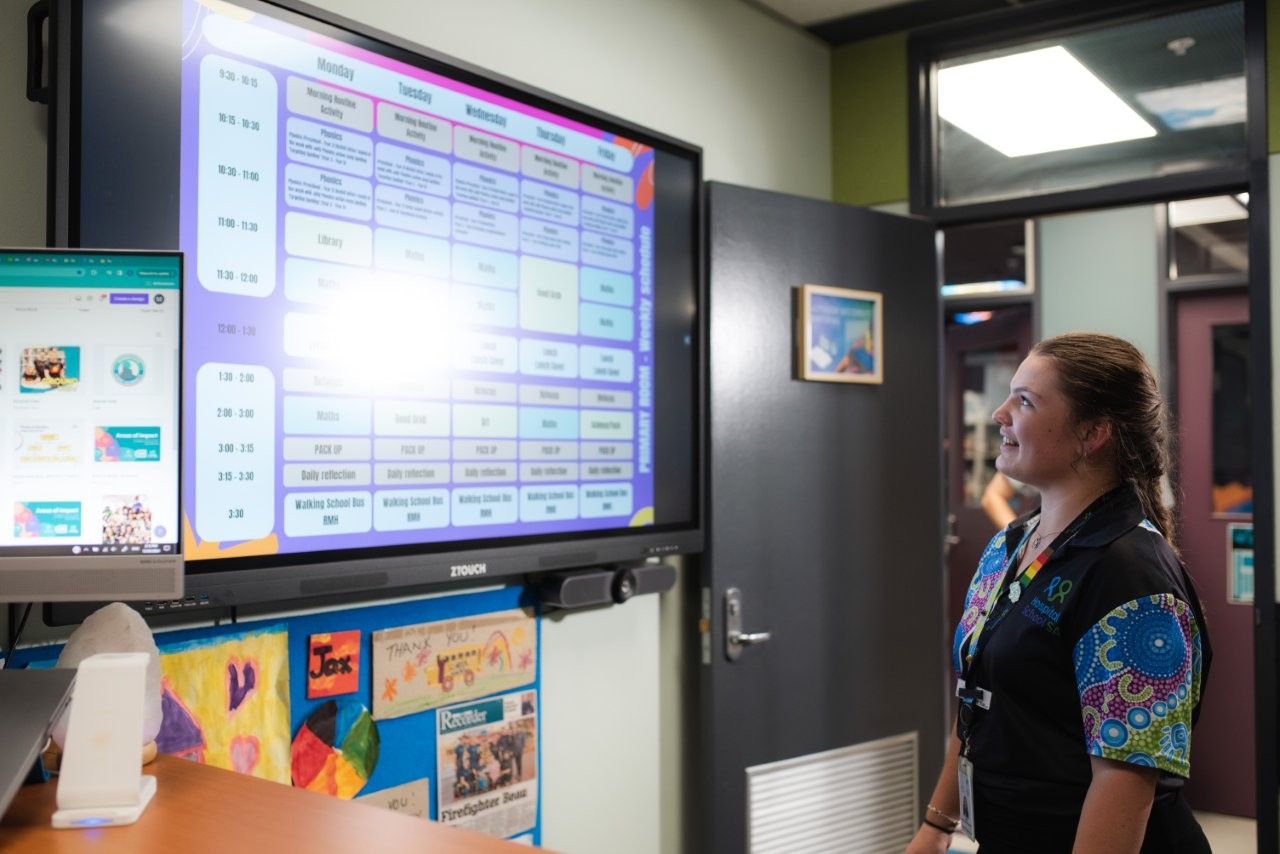
Now studying primary teaching at uni, Wilson says she feels like having already had that SSO (School Services Officer ) experience, she knows what she’s walking into.
“Because uni is a lot of theory work, it’s a lot of textbook, it’s a lot of idealistic perception and getting the tutors to translate it into a real world scenario, we can have those honest conversations and they’re like, “look, yes, it may not work, but this is what you can refer to, for me.”
Wilson says the national award win was humbling and empowering.
“It’s solidified that I am doing what I need to do, I am helping people and I do have value, which I think is really important for me to find,” she says.
Organisers of National Skills Week 2025 (August 25-31) are calling on teachers, school leaders, parents, school leavers, career changers, and job seekers not to discount the merit of a skills-based tertiary education, and to explore all the options.
National Skills Week chair Brian Wexham says this year’s campaign is a reminder of the extraordinary demand for skill‑based careers, and the importance of positioning vocational training as a first‑choice pathway alongside a traditional university education.