The answer is simple – risky play. For some adults, the notion of encouraging risky play might seem counter intuitive. After all, don’t we have a duty of care to protect children from risk?
But before we leap in and try to control the action as adults, however tempting it might be, let’s take a closer look at what’s really going on.
According to one of the biggest international studies conducted, risky play has many benefits for children. These benefits cross domains including social, cognitive, physical, risk competence, aggression and mental health and wellbeing.
In understanding how children can benefit from risky play, it’s important to understand exactly what this means. Risky play does not mean posing a real, substantial danger to children. It does not mean allowing a situation where a child is likely to be injured.
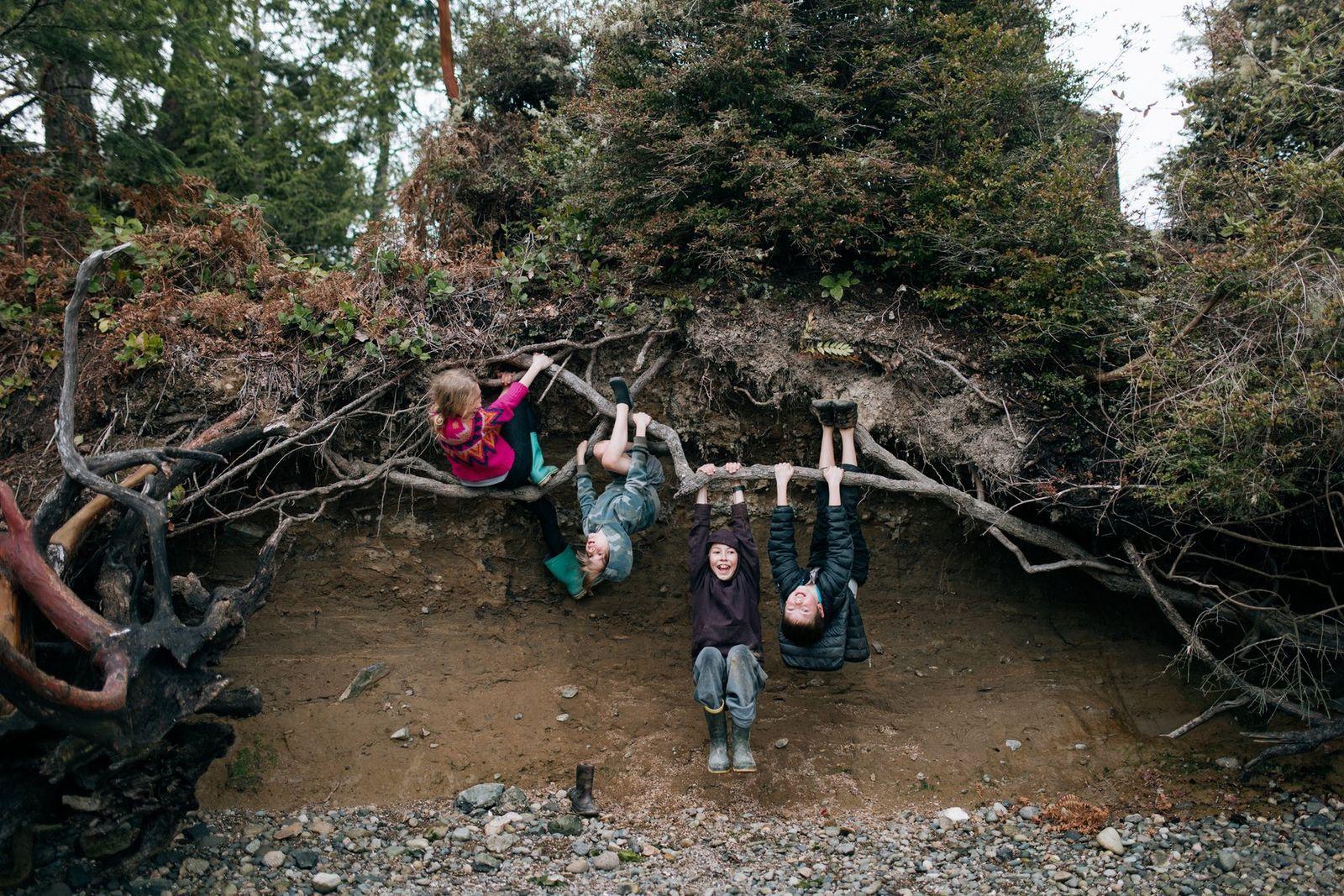
What it does mean is providing access to environments where children can experience and perceive risks in the world around them. They can feel what it’s like to wobble as they walk across a fallen log, or test whether a branch is going to hold their weight before they climb a tree, or experience the warmth of a fire as they toast marshmallows, knowing that they need to stay a safe distance back from the flame.
They learn about using tools safely and cleverly, and they understand that structures they make from natural materials need to be designed carefully so they will last and not fall on anyone.
Risky play let’s children explore, test natural boundaries, rough and tumble with others and design their own games with rules and guidelines they establish for themselves.
And the adults in this equation? Well they’re certainly not absent from their responsibilities as educators. But they are taking on a different role to the traditional, direction and control focused one we often see in schools.
Educators who apply a risky play model in their setting are available to supervise, support and guide. They know which risks are appropriate for which groups of children. They provide just enough supervision for children to experience the feeling of risk, but not so much that children never experience it.
And the research backs up what they are doing. It tells us that children do best when they are able to explore an outdoor, natural environment, away from screens and indoor rules. A place where the games are long and thrilling and the learning is allowed to be spontaneous for a while.
According to the research, outdoor risky play is related to children’s mental health and wellbeing in a positive way. This included parameters such as self-confidence, self-efficacy, resilience, and self-regulation. Being able to play freely and experience risk is associated with benefits that don’t necessarily occur as readily in our increasingly screen-based classrooms.
The research also found that children who were allowed to have greater freedom in terms of their independent mobility (being allowed to function in a location or move from one place to another without adult supervision) was related to physical activity levels.
Children who were more independently mobile were also more likely to have higher levels of physical activity in their week.
Over the years, the focus we have adopted in our schools and early years settings has become increasingly risk averse. To a certain extent this is an important part of good teaching and care for children.
But what has happened along the way has also had unintended consequences. By making play environments more highly supervised and restrictive, we have made it more difficult for children to experience risk, test their skills, challenge themselves and take a chance on how things will turn out.
While no one is advocating for play experiences where children are harmed, perhaps it is time to add some new skills to their play toolkits? By teaching children what it means to think about risk when they play, they can also begin to find out how strong, fast, tall, flexible or creative they can be in the moment too.
Knowing that you might fall as you walk along a log also means acknowledging that if you concentrate and plan your moves, you might get to the other side too.






Comments
No comments yet.
Have your say
An editor reads every comment before it goes up. Keep to the story, argue with ideas rather than people, and don't name or identify students, parents or colleagues. Comments close on 9 December 2026.
Sign in to commentor register free. Your name and school appear with your comment.