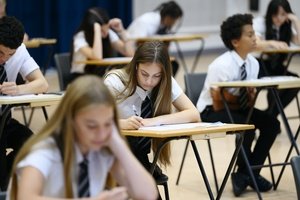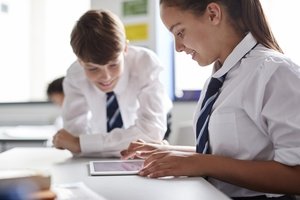


The sweeping changes will “give kids their childhood back,” Starmer told reporters, outlining measures against Snapchat, TikTok, Instagram and other platforms as well as gaming sites that allow strangers to contact children.
“It is clear to me a full ban is the right choice,” he said.
“It will make a huge difference, it will make our children safer, it will make our children happier, it will give them more time, more security, more freedom to grow up, more opportunity”.
However, some experts doubted whether a blanket ban would be effective, and Starmer acknowledged it would be difficult to fully enforce such restrictions.
The UK will go further than Australia – the first country to ban social media for children – with controls on gaming platforms and the possibility of overnight curfews and curbs on infinite scrolling for under-18s.
YouTube, Facebook and X will be covered, the British Government said, but messaging services such as WhatsApp and Signal will not be.
“World-leading blocks on livestreaming and strangers contacting children would also be imposed,” Starmer said.
“Is there a situation in the offline world where you would just let your child pair up with a stranger, an adult that you don't know anything about?” he said.
Dr Belinda Barnet, a senior lecturer in media at Swinburne University in Melbourne, said the ban is good news for the UK.
“Although the ban has been implemented reluctantly (and somewhat ineffectively) by the platforms here, it has encouraged long-term changes by the platforms themselves to protect kids," Barnet said.
“This wouldn’t have happened without the ban."
For example, she said, Roblox made children’s accounts private, with no chat function, to avoid bans.
“TikTok and YouTube have significantly strengthened child protections. The list goes on.
“My advice to the UK would be to go in strong with this and make the platforms take responsibility.
“Make sure they implement it properly and not half-heartedly. They will try to drag their feet."

Along with a blanket ban on social media, British PM Keir Starmer is expected to announce restrictions on certain features for online products which could include gaming platforms and messaging apps such as WhatsApp.
Starmer said services designed for children and education such as YouTube Kids, Lego Play and Google Classroom will not be affected by the ban.
While a majority of parents and politicians back a ban, some psychologists and researchers have said there is no proof that it would work, and a group of school children in London told Reuters they had a conflicted relationship with the technology.
As ministers push to enact the new restrictions by next spring the world’s biggest technology companies have said the ban will push teenagers towards more harmful platforms.
Meta, YouTube and Snapchat have criticised the ban, with a spokesperson for Meta, which owns Facebook and Instagram, saying: “As we’ve seen in Australia, bans risk isolating teens from online communities and information, and driving them to unregulated alternatives that lack built-in protections and parental controls”.
YouTube said in a statement: “Blanket bans push kids out of such curated, supervised, beneficial experiences and towards anonymous, less-safe services”.
Social media companies have already put in place child safety measures, such as new algorithms, in response to tightening regulations, including by the UK.
They said on Monday that a blanket ban could push young people onto riskier platforms that did not offer the protections they had introduced.
YouTube said it had invested in “expert-led, age-appropriate experiences and default protections for teens for over a decade”.
“YouTube is a vital resource for young people, educators and parents,” a spokesperson said on Monday.
Snapchat said an outright ban would disconnect teens from private messaging between friends and family that accounted for the majority of time spent on its service, adding that the scope of the ban should be reviewed.
“… an outright ban that disconnects teens from those relationships doesn’t make them safer – it may simply push them to less safe platforms,” a spokesperson said.
A ban could be in place next northern hemisphere spring, Starmer said, underpinned by existing powers and new regulations due by the end of the year.
The ban will likely require age checks to be expanded to all users, something regulator Ofcom has already introduced for pornography sites.
Ofcom said it was ready to work on that.
Starmer, facing a likely leadership challenge in the coming weeks, acknowledged that children would get around the restrictions but said a ban – which could be his main legacy – would bring long-term change to the culture around social media.
He will announce the ban on Monday morning after months of pressure to act.
“How we keep kids safe online is one of the biggest debates of our time. As a dad, I know every parent wants their child to grow up safe and happy,” The Guardian said he will say.
“This is a choice about whose side we’re on: families across the country, or a status quo that isn’t working. People rightly expect action, and this government will always stand up for parents and put children first.
“That’s why we will call time on a system that’s failing our kids and take bold action to give every child the best possible start in life.”
Government sources said protecting teenagers from harmful addictive content, such as through infinite scrolling, as well as from contact with strangers, were the key drivers of the hardline measures.
(with AAP)