


At Tarneit Rise Primary School in Melbourne’s west, principal Nadia Bettio has been busy driving a school-wide instructional shift to best practice in every classroom.
Keen to empower her leadership team with a shared understanding of what evidence-based instructional leadership looks like and how high-impact teaching could be successfully implemented at scale, in 2024 Bettio enrolled several leaders in The Academy for the Science of Instruction’s workshop, ‘Leading School Transformation’.
The professional learning prompted a big change in the school’s approach to making decisions, Bettio says.
While leadership had previously sought a majority buy-in from all staff to determine the direction, pace and strategy behind any potential changes in the school, Bettio opted to place responsibility and ownership solely in the hands of her executive team.
She says top-down leadership is often viewed negatively in schools because it can be seen to limit teachers’ voice and autonomy – but this couldn’t be further from how it has played out at Tarneit Rise.
“We’re hearing lots of criticism around explicit instruction or direct instruction as deprofessionalising teachers,” Bettio tells EducationHQ.
“So, I think often top-down decision-making can be viewed in that same way. And in some contexts, it’s actually been linked to compliance-driven approaches rather than genuine engagement.
“But our experience has shown that the issue’s not with the direction of decision-making, but it’s more with how that’s enacted.”
The principal says the change has been incredibly well received by staff.
“We found that when leadership provides a clear evidence-based direction, while being really transparent about the rationale and actively supporting teachers, it reduces ambiguity and it strengthens implementation.
“And I think teachers are genuinely really appreciative of decisions being made in this [way] - that’s been our experience anyway.”
With a rapidly growing student cohort of more than 1600, and a staff of 200 to oversee, Bettio says before leaders took ownership of the improvement agenda progress was slower and the overall vision of where things were heading was less clear.
“Relying on that majority buy-in just slowed the pace of improvement, and at times it really diluted the impact of key initiatives,” she explains.
“Collaboration, it remains important, but that consensus-based decision-making can lead to compromises that are not aligned with best practice.”
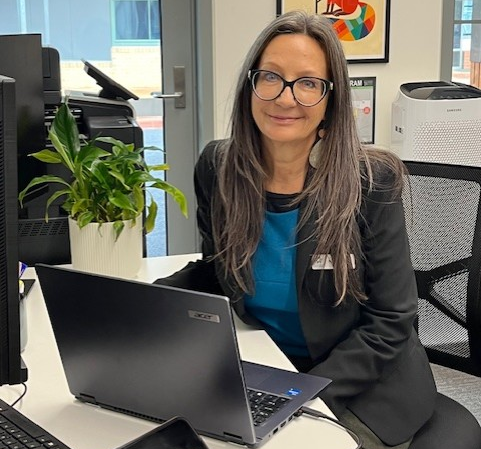
Principal Nadia Bettio now uses teacher voice to measure readiness for change, rather than rely on it to decide the strategic direction for the school.
Bettio’s leadership team invests a great deal of time upskilling their knowledge around evidence-aligned pedagogy, multi-tiered systems of support, and how to best roll out these initiatives to lift learning outcomes across the board.
“We spend a lot of time engaging in research and attending conferences and doing our own professional learning and visiting other high-performing schools and talking to program developers.
“That’s not the work of the teachers, that’s [our work as leaders]. So, if we want whole-school consensus, teachers might be asked to make decisions or give input without having the information at the level that we’ve got.”
This can lead to compromises being made that might not always be aligned with best practice, Bettio adds.
“Having that high-level consultation where everyone’s consulted, just contributes to inconsistency – there’s varying levels of implementation across classrooms and ultimately that can lead to, or has led to, limited ability to act decisively and ensure that all students have access to high-quality evidence-based instruction.”
Ultimately it comes down to owning your leadership position and the responsibilities that come with it, the principal says.
“I think in the end you just need to really look at ‘what is our role in the school?’ and my role as the principal is to make those high-level decisions – and make them well-informed, but nevertheless it’s to make them.
“And that’s not the classroom teachers’ job.”
This is not to say that teachers have no input in the school’s strategic direction, however. Every implementation includes opportunities for teachers to have their say built in, Bettio says.
“Staff are actively engaged in the process, and sometimes we will make a decision and through that teacher voice opportunity or tool as part of implementation, we may need to modify the decision that we’ve made because we can foresee, ‘okay, if we go ahead with this, the readiness isn’t quite there yet’.
“So we’re using teacher voice just to measure readiness and to ensure that as a school, we are ready for this … I found just being empowered to make those decisions, but including that teacher voice tool has allowed for really high-fidelity implementation across the school, particularly in maths and English.”
Early feedback data shows a significant 20 per cent increase in staff trust in the leadership team in a short space of time, Bettio reports.
One of her key priorities has been to strengthen the school’s early years literacy program. She says the decision to switch to the InitiaLit program has proved a sound move on this front.
“We were prompted to critically evaluate our Tier 1 practices.
“We’d had really great success with our Tier 2 intervention, and so that led to an opportunity to stand back and just really reflect on and evaluate what was happening at Tier 1 level, because we know we can’t ‘Tier 2 our way out of a Tier 1 problem’,” Bettio shares.
The school now uses MultiLit’s whole-class initial instruction program, with implementation coaches closely evaluating if teachers’ instruction aligns with various fidelity markers.
Encouragingly, the proportion of Foundation students considered at-risk in reading has halved in the span of six months.
“We’ve been able to adopt a more deliberate, evidence-informed approach, not just in English, but right across our school now,” Bettio says.
“So, using this model, where instructional priorities are clearly defined, they’re consistently communicated, and then that’s embedded through our clearly defined roles and responsibilities.
“We have detailed implementation plans [which are] really … transparent, that are shared with everybody.”
Leadership’s focus has now turned to bedding down teaching practices in Years 3-6 by improving explicit instruction and solidifying engagement norms, with plans in motion to better identify and extend high-ability students in their learning.
Bettio says she’s ’really lucky’ to work with an incredible group of educators who back and believe in the ‘why’ behind the work she’s leading.
“And since the mandate has come from the department about phonics instruction, I just think that we’re just really lucky that as a network we can work together on this as well, so we can learn from each other and with each other.
“So it’s not just the work that we’re doing in our school, but also across the network that’s going to make such a big difference for the children in our community.”